
Last updated October 30, 2026
ADU Builders Troubleshooting: Common Problems and How to Fix Them
The most expensive ADU mistake isn’t choosing the wrong floor plan. It’s discovering mid-project that your builder has never navigated a correction notice from your specific city’s building department, and you’re now paying carrying costs while they figure it out. In Aliso Viejo, where accessory dwelling units have become a serious strategy for rental income and multigenerational housing, the difference between a smooth build and a stalled one usually comes down to whether your builder anticipated five predictable problems before they happened. This guide names those problems and shows you exactly what the fix looks like, so you can spot them early or avoid them entirely.
Quick Answer
The most common ADU builder problems are plan check correction loops, unexpected utility connection upgrades, finish-phase scope creep, HOA and city permit delays running on parallel tracks, and builders who go quiet mid-project. Most of these are preventable when you hire an ADU specialist who has already navigated your city’s specific permitting process, carries full in-house finish capability, and can produce a clear schedule with lien releases before you sign. For a deeper look at what that partnership should cover, see our ADU Builders services.
Table of Contents
- Problem 1: Plan Check Correction Loops
- Problem 2: Utility Connection Surprises
- Problem 3: Scope Creep on Finishes
- Problem 4: HOA Delays vs. City Permit Delays
- Problem 5: Your Builder Goes Quiet
- Common Mistakes to Avoid
- When to Call a Professional
- Frequently Asked Questions
Problem 1: Plan Check Correction Loops
A correction loop happens when your submitted ADU plans get kicked back by the city with a list of required changes, then kicked back again after you resubmit, and again after that. Each cycle costs two to six weeks. We’ve seen Aliso Viejo homeowners lose four months to correction loops that an experienced ADU builder would have closed in a single round. The city isn’t being difficult; they’re applying specific code interpretations that vary block by block, and a builder who hasn’t worked that exact jurisdiction before is essentially learning the rules on your timeline.
What causes the loops:
- Setback and height interpretations that differ from what the architect assumed from the published municipal code.
- Fire sprinkler requirements triggered by lot size, proximity to property lines, or distance from the nearest hydrant.
- Utility easement conflicts that the city catches on the second or third review because the first reviewer focused on structural sheets.
- Incomplete energy compliance documentation (Title 24, California’s energy code) that general contractors often treat as an afterthought.
The fix starts before you sign a contract. Ask any builder you’re considering for documentation of their most recent ADU permit approval in your city, including the number of correction rounds. A specialist who builds ADUs in Aliso Viejo regularly can show you a pattern of first-round or second-round approvals. If they can’t produce that, you’re hiring someone to learn on your project. Also ask who prepares the plans. Builders using in-house drafting or a dedicated ADU design partner typically route corrections faster than those who outsource to a general-purpose architect who isn’t in the room when the city comments come back.
Problem 2: Utility Connection Surprises
Here’s the budget-killer that catches homeowners off guard: the ADU structure itself fits the budget, but connecting it to existing utilities doesn’t. Electrical panel upgrades, sewer lateral replacements, and water line upsizing can add $15,000 to $40,000 to a project that was priced assuming the existing infrastructure would carry the extra load. In Aliso Viejo’s older neighborhoods, homes built in the 1970s and 1980s frequently have 100-amp panels and original clay sewer laterals that were never designed to serve a second dwelling.
The problem isn’t that these upgrades exist. The problem is that a general contractor discovers them after demolition starts, when you have no negotiating leverage and a hole in your yard. An ADU specialist surfaces them in due diligence, before you’ve committed.
What to inspect before signing:
- Electrical panel capacity. A 100-amp panel will almost always need an upgrade or a subpanel for an ADU with a kitchen and laundry. Budget $3,000 to $8,000 depending on the panel location and service size.
- Sewer lateral condition. A camera inspection costs a few hundred dollars and tells you whether the existing line can handle the ADU’s waste load or needs replacement. Replacement can run $8,000 to $20,000 depending on depth and length.
- Water meter and line size. Some older Aliso Viejo lots have 3/4-inch meters that need upsizing for fire sprinkler flow requirements, which adds $4,000 to $10,000.
- Gas line capacity if your ADU will have a gas range, dryer, or tankless water heater. Tankless units often require a larger gas line than the existing stub provides.
The best builders include a utility feasibility check as a written line item in their pre-construction agreement. It costs a little upfront and saves you from a five-figure surprise at the worst possible moment. When you’re comparing bids, ask each builder whether their quote includes a panel upgrade assumption, a sewer camera inspection, and a written contingency line for utility unknowns. A vague answer is your signal to dig deeper.
Problem 3: Scope Creep on Finishes
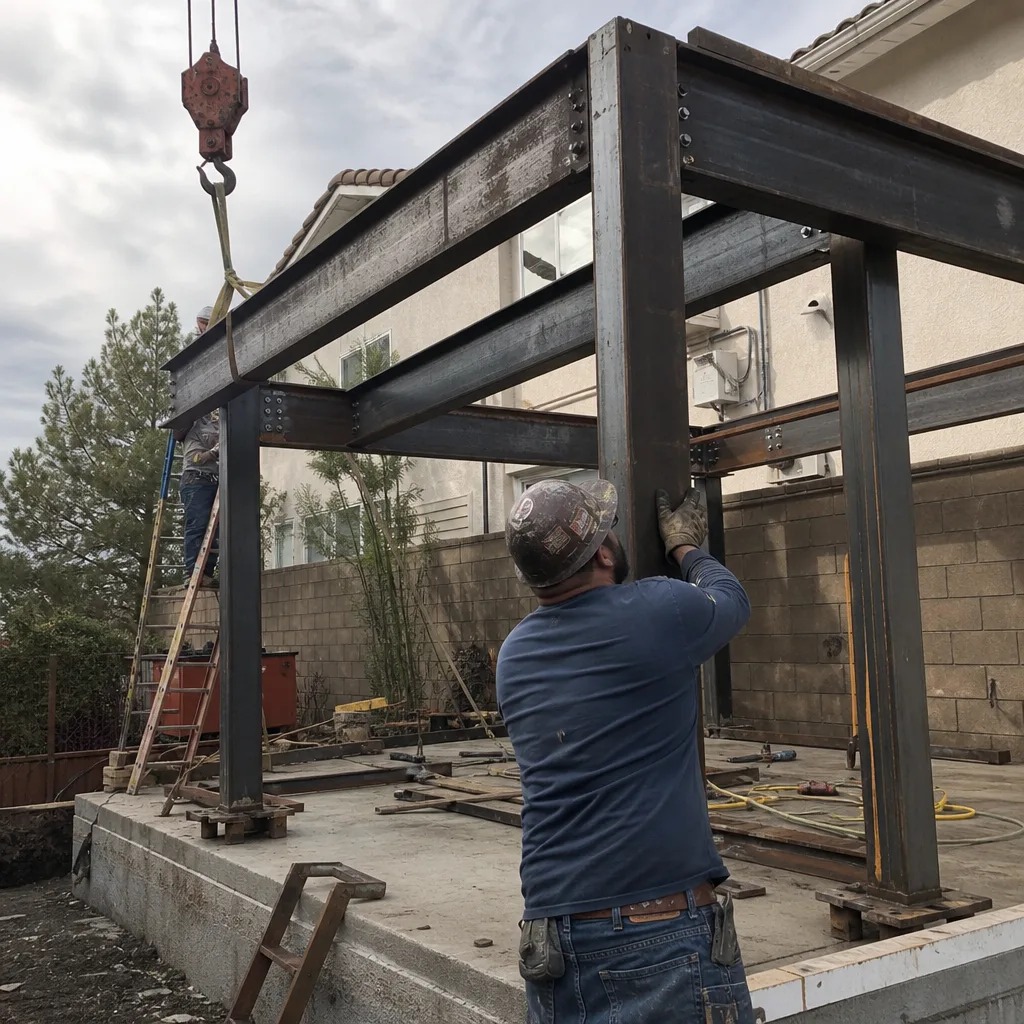
The ADU shell goes up fast. Framing, roofing, siding, windows, drywall: that’s the part every contractor knows how to do. Then the project hits the finish phase, kitchen cabinets, tile, countertops, plumbing fixtures, and it slows to a crawl. Why? Because the general contractor is now coordinating a kitchen subcontractor, a bathroom subcontractor, a countertop fabricator, and an appliance installer, none of whom answer to the builder directly, and all of whom are booked out weeks in advance. The finish phase on an ADU can stretch from a planned six weeks to four months, not because the work is hard, but because nobody on the job controls the finish trades in-house.
In our experience building ADUs in Aliso Viejo, the finish phase is where schedules die. We’ve walked onto projects mid-stream where the shell was complete, the inspections were passed, and the homeowner was waiting eight weeks for a tile setter because the GC’s preferred sub had three other jobs ahead of theirs. The unit was sitting there, weather-tight, doing nothing. That’s carrying cost with no rent coming in.
The fix is structural: hire a builder who employs or directly manages their own kitchen and bathroom finish crews. When the ADU structure and the interior finishes fall under one contract and one project manager, the finish phase is sequenced before the shell is even ordered. Cabinets are measured and fabricated while framing is underway. Tile is ordered at the same time as the roofing material. The plumbing rough-in and the vanity selection happen in the same week, not months apart. Sunstone ADU Builders was built around this model because we saw too many Aliso Viejo homeowners stalled between a completed shell and a rentable unit. One contractor, start to finish, isn’t a slogan. It’s the difference between a unit that cash-flows in month one and a unit that sits empty while subs sort out their calendars.
Problem 4: HOA Delays vs. City Permit Delays
Aliso Viejo is an HOA-dense city. A meaningful share of single-family lots fall under homeowners associations with architectural review committees, and those committees have their own approval process that runs completely separate from the city’s building permit process. The mistake most homeowners and many general contractors make is treating them sequentially: get HOA approval first, then submit to the city. That ordering can cost you three to four months of dead time.
The right approach is to run them in parallel. Submit your HOA architectural application and your city permit application in the same week. The HOA is usually reviewing aesthetic concerns, rooflines, exterior materials, setback compliance from a design standpoint. The city is reviewing structural, fire, and code compliance. They’re asking different questions, and neither one needs to wait for the other’s answer. An ADU specialist who works in Aliso Viejo knows which HOAs in the area are fast, which ones have boards that meet only monthly, and which ones have specific design guidelines that need to be addressed in the initial submittal to avoid a rejection letter that resets the clock. We’ve also covered how to keep your unit functional during regional emergencies in our ADU Emergency Preparedness Guide for Aliso Viejo Homes.
Also understand this: HOA approval does not mean city approval, and city approval does not mean HOA approval. You need both, and neither body cares about the other’s timeline. If your builder assumes the city permit is the only gate, you’ll discover the HOA requirement at the worst possible time. Ask any builder you’re vetting: “Which Aliso Viejo HOAs have you worked with, and did you submit HOA and city applications in parallel?” The answer tells you everything about whether they’ve done this before.
Problem 5: Your Builder Goes Quiet
This is the one nobody plans for. You’re four months into the project, the shell is up, and suddenly your builder stops returning calls. Or they show up sporadically. Or they tell you the next phase is delayed but won’t give you a revised schedule in writing. What you do in the next two weeks determines whether you finish the project or lose tens of thousands of dollars.
Here’s a step-by-step action checklist for homeowners mid-project:
- Document everything. Pull every text, email, and contract amendment into one folder. Note the dates of every missed milestone, every unreturned call, every verbal promise you remember with its approximate date.
- Demand a written schedule. Send a dated email or letter requesting a revised completion schedule with specific dates for each remaining phase. A builder who is simply overwhelmed will produce it. A builder who has stopped managing your project won’t.
- Request lien releases. Ask for conditional and unconditional lien releases for every subcontractor and supplier who has billed to date. If your builder can’t produce them, stop issuing payments. A missing lien release means a sub can file a mechanic’s lien against your property even if you’ve paid the builder in full.
- Verify permits and inspections. Call the city directly and confirm which inspections have passed and which are still outstanding. Don’t rely on the builder’s summary. Cities keep this on file, and it’s public information.
- Pay only against verified work. Stop paying ahead of completed work. Every payment from this point forward should cover work that is complete, inspected, and documented.
- Consult an attorney. If the builder can’t produce lien releases or a schedule within ten business days, get legal advice. A demand letter from a lawyer costs a few hundred dollars and often resolves the situation faster than months of negotiation.
The best protection against this problem happens before it starts. Check your builder’s license status with the California Contractors State License Board. Ask for references from projects completed in the last twelve months, not three years ago. And choose a builder whose business depends on ADU work specifically. A specialist who builds ADUs in Aliso Viejo week after week has a reputation to protect in a small market. That’s a powerful incentive to finish what they start.
Common Mistakes to Avoid
- Hiring a general contractor who has never built specifically in Aliso Viejo. City-specific code interpretations and HOA design review processes vary enough that first-timers burn weeks and sometimes months learning on your project. Ask for recent local ADU permits before signing.
- Assuming the quote includes utility connection work. Most entry-level ADU quotes cover the structure only and bury utility upgrades in the fine print as exclusions. Get a written line item for panel capacity, sewer lateral condition, and water meter size.
- Treating HOA approval and city permitting as sequential processes. Run them in parallel from week one. Waiting for HOA sign-off before submitting to the city costs you the HOA’s full review cycle in dead time.
- Paying large deposits before permits are issued. A reasonable deposit covers design and permit work. A builder demanding 30-50% upfront before the city has issued a permit is shifting risk onto you. In California, deposits are limited to 10% or $1,000, whichever is less, by law.
- Choosing finishes after the shell is up. Decisions made late in the finish phase cause the longest delays. Kitchen and bathroom selections should be locked before rough-in begins, which means your builder needs in-house finish capability or a very tight sub network.
- Skipping the sewer camera inspection. A few hundred dollars now prevents an $8,000 to $20,000 surprise after the foundation is poured. Aliso Viejo’s older homes, particularly those built in the 1970s and 1980s, are prone to clay lateral failures that only show up under load.
- Assuming every prefab brand works on every lot. Prefab ADUs have genuine advantages in controlled factory conditions and faster shell installation, but not every brand fits every Aliso Viejo lot’s setback, access, and grading constraints. A builder authorized for multiple brands, including Abodu, Cover, and Dvele, can recommend based on your site rather than selling you the one they happen to carry. This access to multiple prefab brands and traditional construction methods is exactly what we offer at Sunstone ADU Builders, because a single-brand recommendation usually means the recommendation serves the builder’s inventory, not your lot.
When to Call a Professional
Call an ADU specialist before you’ve signed anything, not after a problem appears. Specifically, call when you’re comparing bids and can’t tell why they differ by $50,000, when your HOA has already rejected your first architectural review, when you’ve received a correction notice from the city, when your current builder can’t produce lien releases or a written schedule, and when you want an honest assessment of whether prefab or traditional construction fits your site. In Aliso Viejo, these are the moments where a specialist’s daily experience in the city’s permitting and HOA landscape pays for itself. Sunstone ADU Builders offers free estimates in Aliso Viejo. Call (855) 949-1913 to schedule one, or explore our approach on the Sunstone ADU Builders home page.
Frequently Asked Questions
The most common problem is plan check correction loops, where the city bounces your permit application back multiple times for changes. Each round costs two to six weeks, and builders without specific experience in your city’s code interpretations cause the most loops. In Aliso Viejo, correction loops are the number one source of ADU schedule delays we see. Call (855) 949-1913 for an exact quote, estimates are free.
Unexpected utility upgrades typically add $15,000 to $40,000. The three biggest drivers are electrical panel upgrades ($3,000 – $8,000), sewer lateral replacement ($8,000 – $20,000), and water meter upsizing ($4,000 – $10,000). A utility feasibility check before you sign surfaces these costs in advance. Call (855) 949-1913 for a detailed quote, and ask specifically about panel and sewer assumptions in any bid you’re comparing.
The price should not change on a properly scoped project unless you change the scope or the site reveals a hidden condition that was flagged as a contingency in your contract. The builders who protect you are the ones who include written utility contingency lines and confirm finish selections before rough-in. If your builder’s contract is vague about change orders, get that fixed before you sign. Call (855) 949-1913 to review your existing bid with us, no cost.
A typical ADU in Aliso Viejo takes 9 to 14 months from permit submittal to move-in, depending on whether you choose prefab or traditional construction, the condition of your existing utilities, and whether you have an HOA review. Prefab shells can cut two to three months off the structural phase. The biggest variable is correction loops and HOA cycles, which is why parallel processing and city-specific experience matter so much. For a schedule specific to your lot, call (855) 949-1913.
Yes, in most cases, a stalled ADU can be recovered. It starts with documenting every missed milestone, demanding written schedules and lien releases from the current builder, and bringing in a specialist to assess what’s actually been completed against what’s been paid. We’ve taken over stalled projects in Aliso Viejo and completed them, often with prefab options for the remaining shell work. Call (855) 949-1913 for an assessment, and bring your documentation.
Neither is universally better. Prefab shines on lots with clear access and standard setbacks, where factory-built quality control and faster shell installation deliver real schedule advantages. Traditional stick-built works better on irregular lots, hillsides, or designs that don’t fit a factory module’s transportation envelope. A builder who offers both, as ADU Builders in Aliso Viejo do at Sunstone, can recommend based on your actual site. Call (855) 949-1913 for a site-specific recommendation.
The Bottom Line
ADU projects don’t fail because of bad luck. They stall and run over budget because of five predictable problems: plan check correction loops, utility connection surprises, finish-phase scope creep, HOA and city delays running sequentially instead of in parallel, and builders who go quiet when the project gets hard. Every one of these problems has a known fix, and every fix is easier to apply before you sign a contract than after. In Aliso Viejo, where ADU demand continues to grow and the permitting landscape rewards specialists, the right builder choice determines whether your unit cash-flows in month one or sits unfinished while someone learns the city’s rules on your dime. If you’re planning an ADU, or if your current project has stalled, call (855) 949-1913 for a free estimate. We’ll give you a straight answer about what’s fixable, what it costs, and what comes next. For more on our interior finish work, see Bathroom Remodeling in Aliso Viejo and Kitchen Remodeling in Aliso Viejo.
Written by the team at Sunstone ADU Builders, serving Aliso Viejo since 2011.